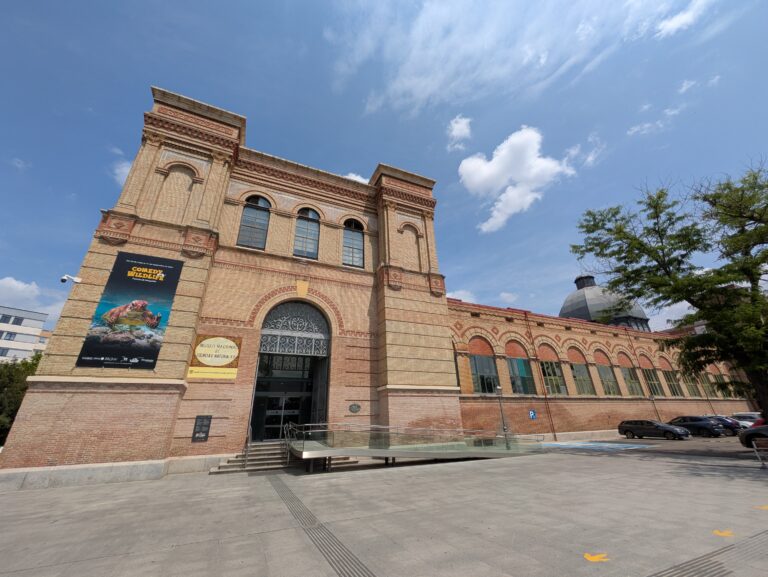


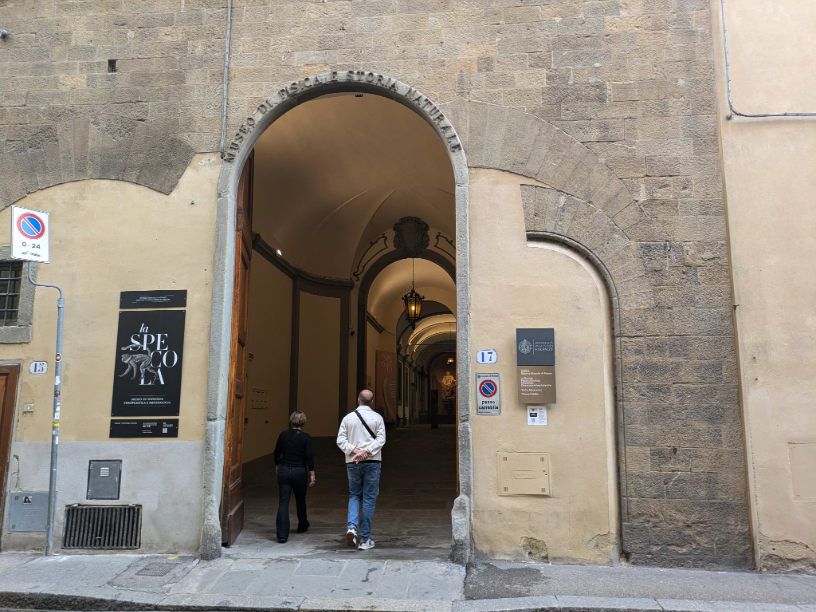
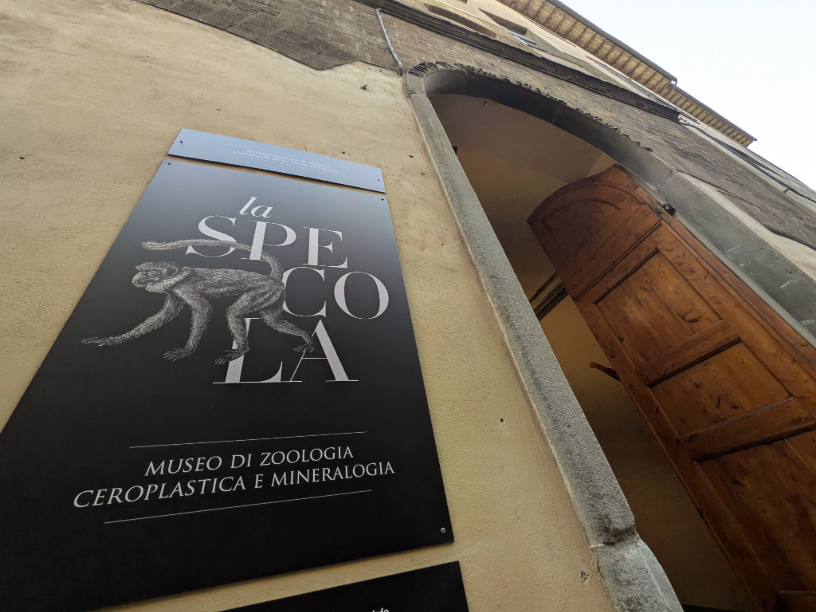
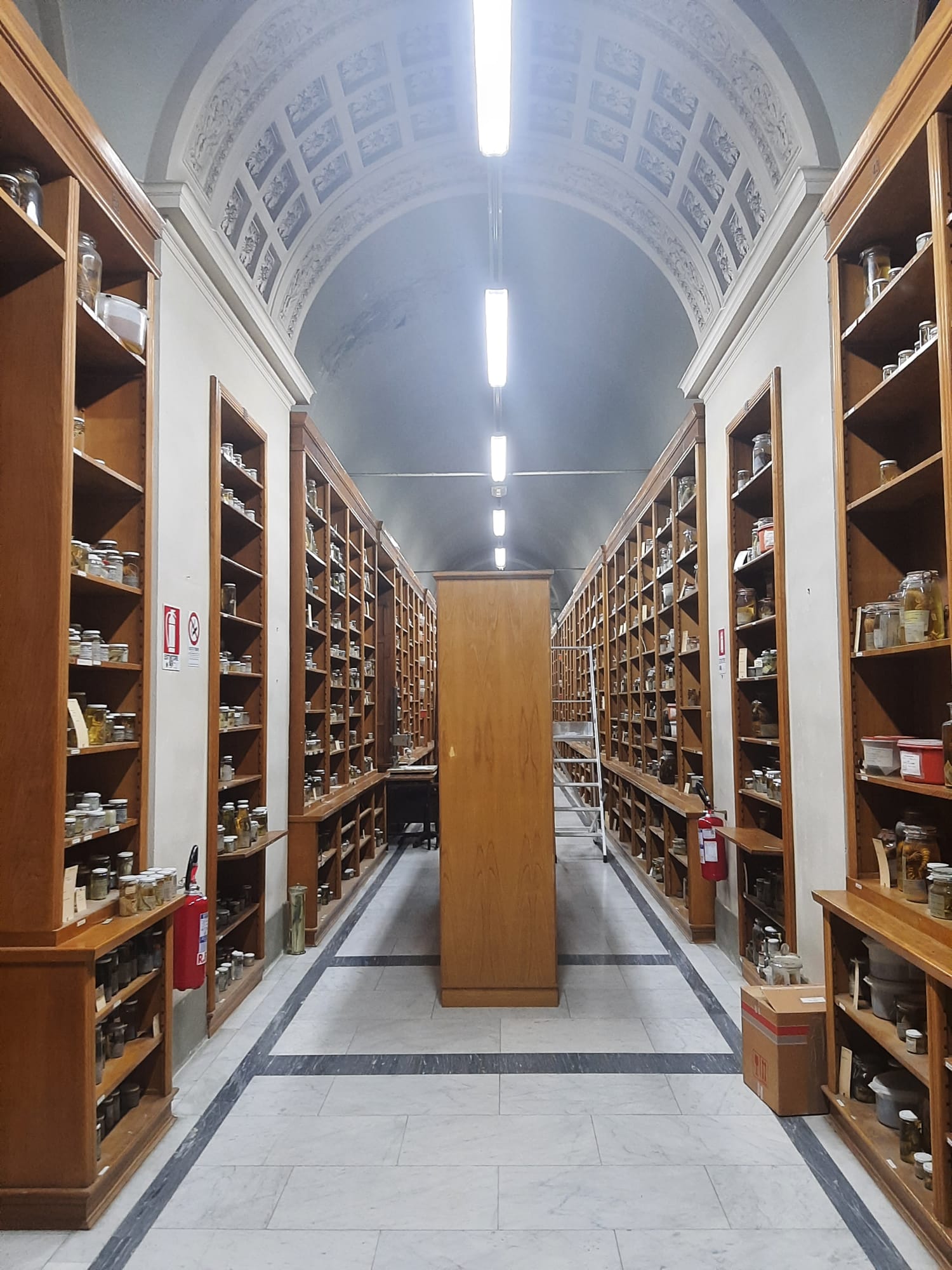
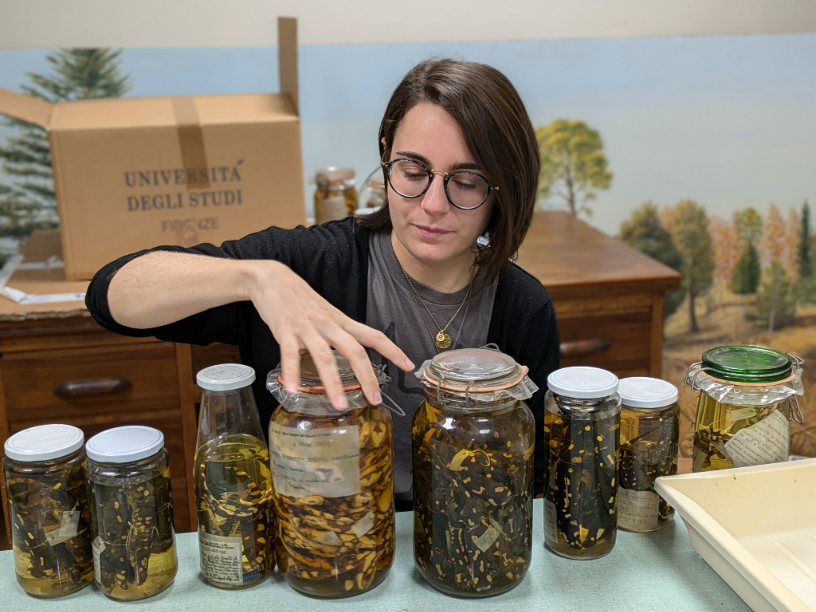
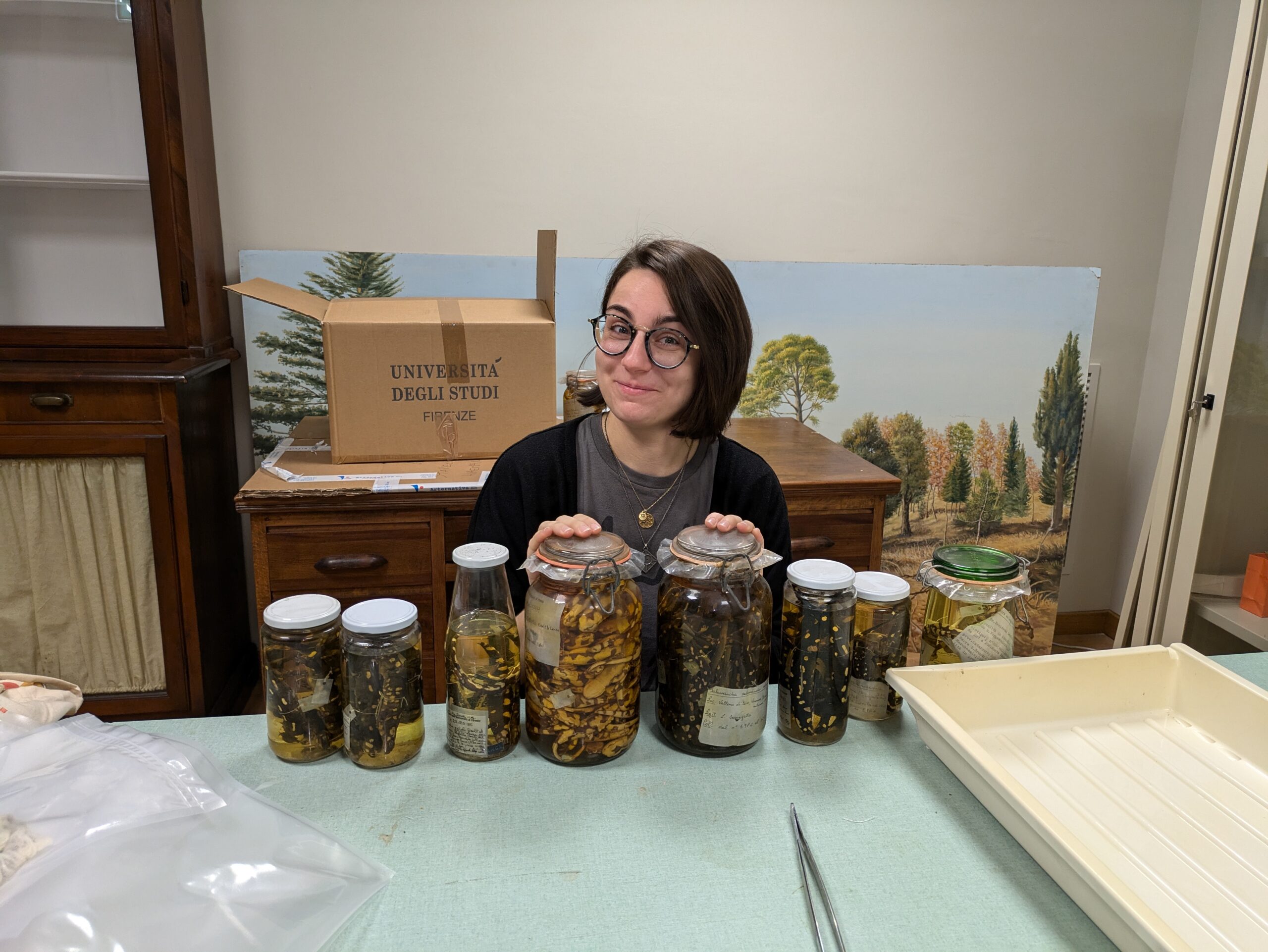
We were incredibly excited to visit the herpetology collection at La Specola in Florence, Italy, for the very first time. This museum has long held a special reputation among herpetologists, and finally having the opportunity to explore its collections in person felt truly inspiring. From the moment we arrived, we were warmly welcomed by the curator of herpetology, Annamaria Nistri, whose kindness and enthusiasm made the visit even more memorable.
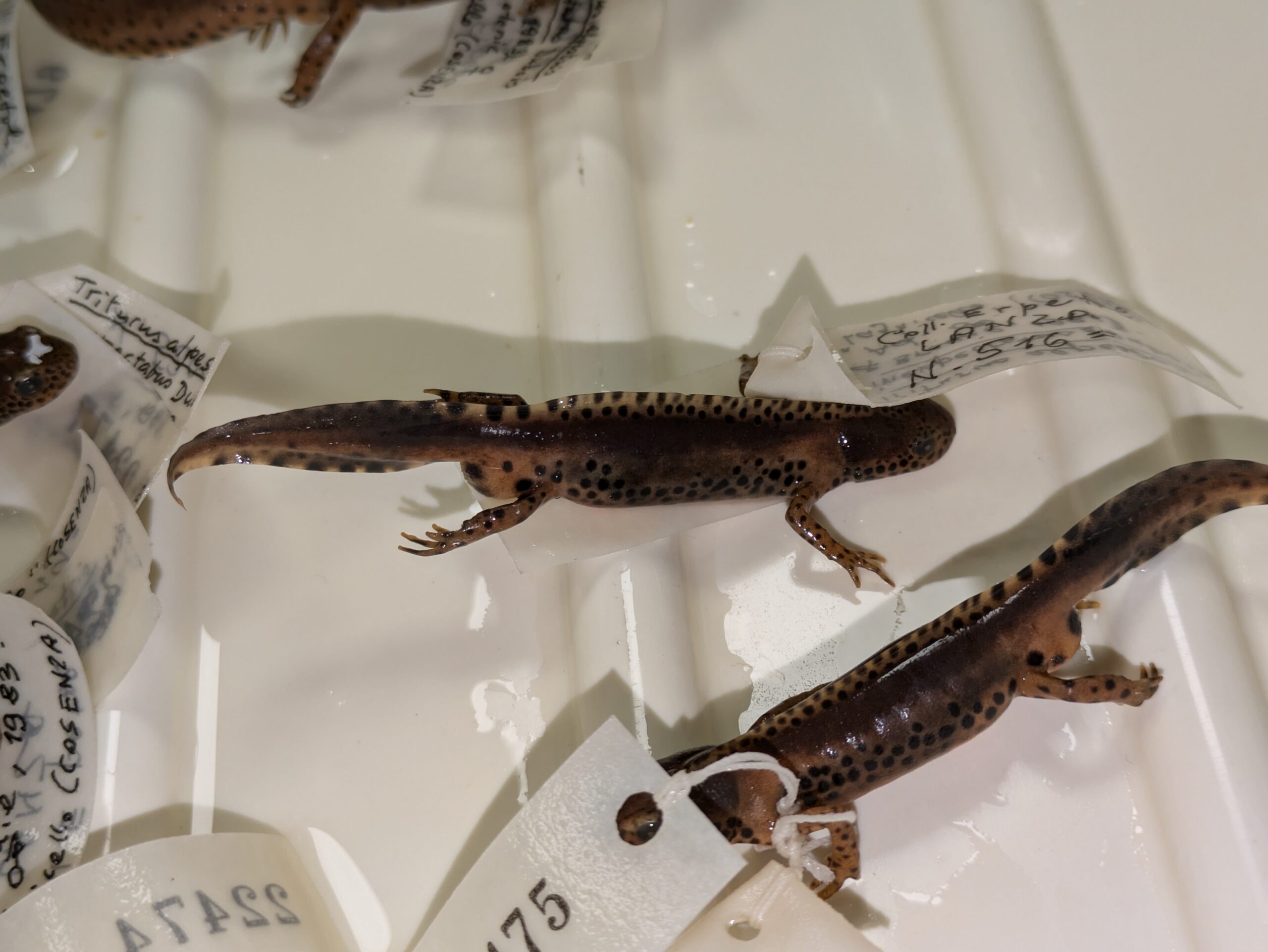
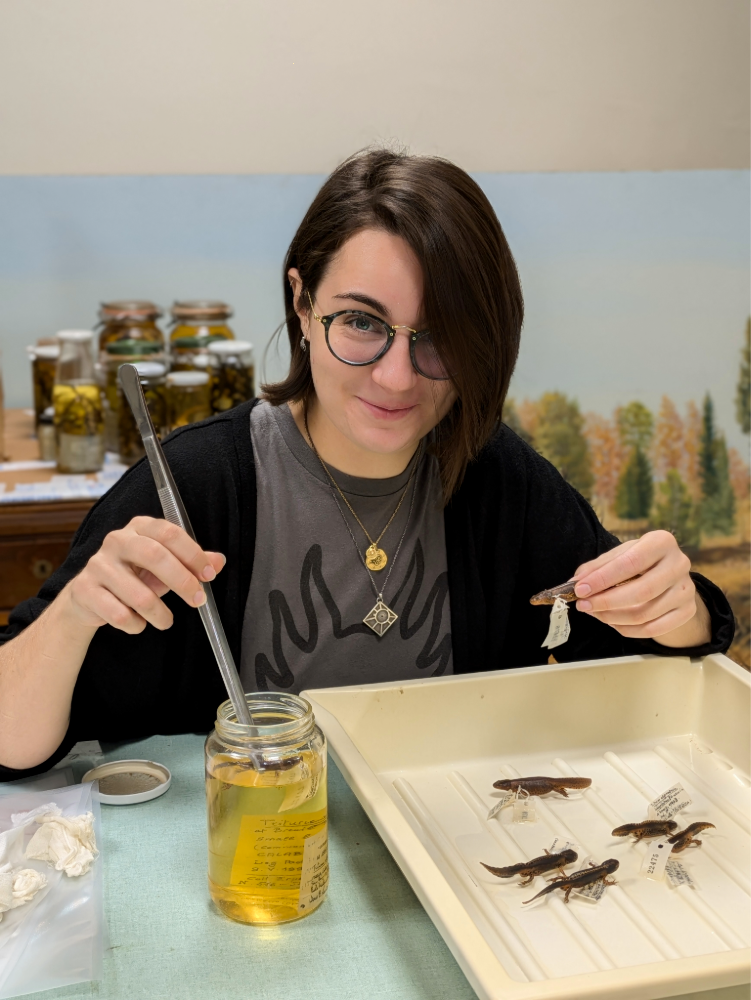
The collection itself is remarkable and contains an impressive diversity of amphibian specimens from Italy and across Europe. In particular, La Specola is famous for its valuable material of alpine newts and fire salamanders, two emblematic species that are central to PhD project of Morgane. For us, one of the most exciting moments came when we realized the extraordinary number of alpine newt specimens originating from both paedomorphic and metamorphic populations. Finding such a rich representation of both life-history forms in a museum collection is exceptionally rare and immediately highlighted the scientific importance of this material.
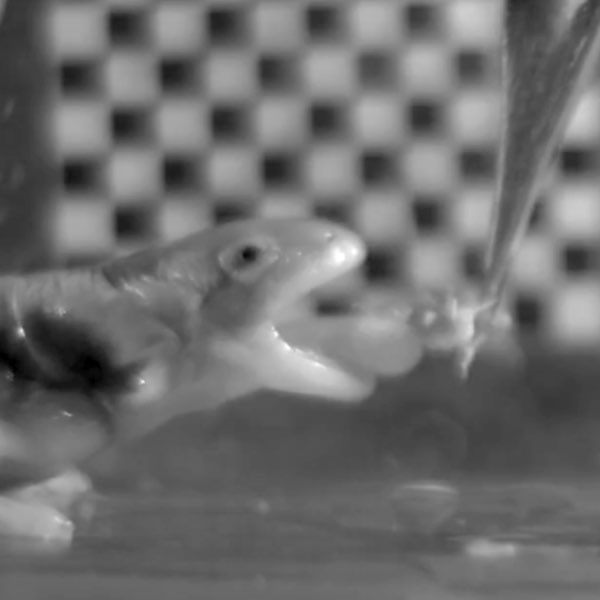
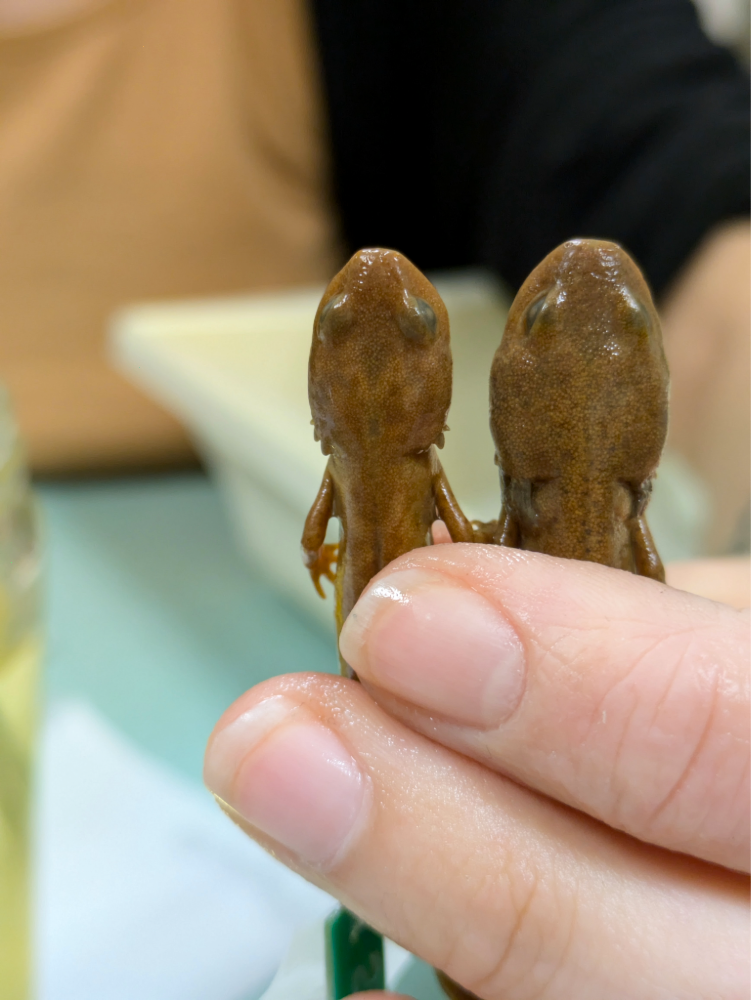
Even at first glance, the external differences between these forms are striking. Paedomorphic alpine newts retain their larval characteristics into adulthood and almost have the head shape of a fish, with chunky features and external gills that give them a very distinct appearance. In contrast, metamorphic individuals are much smaller and less fishy-looking, with noticeably smaller heads. Seeing these forms side by side was fascinating and offered a powerful visual illustration of developmental diversity in salamanders.
During our visit, we carefully selected a large number of specimens that will soon be CT-scanned in Tübingen over the coming weeks. These scans will provide valuable morphological data for ongoing research projects and will contribute significantly to Morgane’s PhD work. The richness of the collection promises exciting opportunities for comparative analyses and new insights into the evolution of developmental strategies in salamanders.
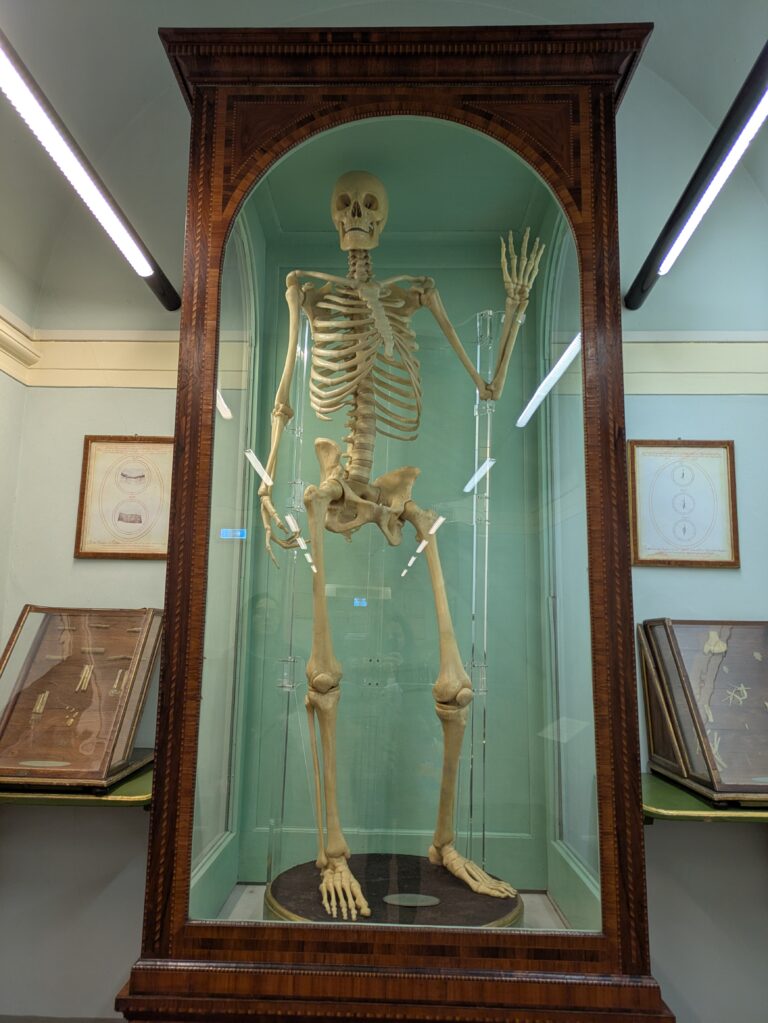
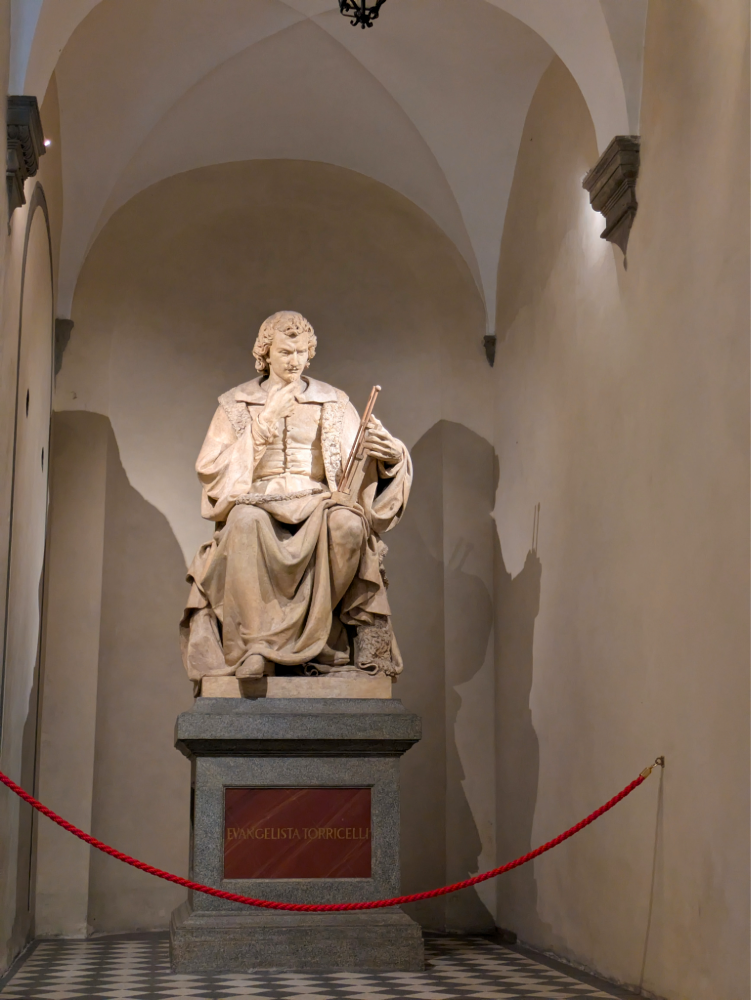
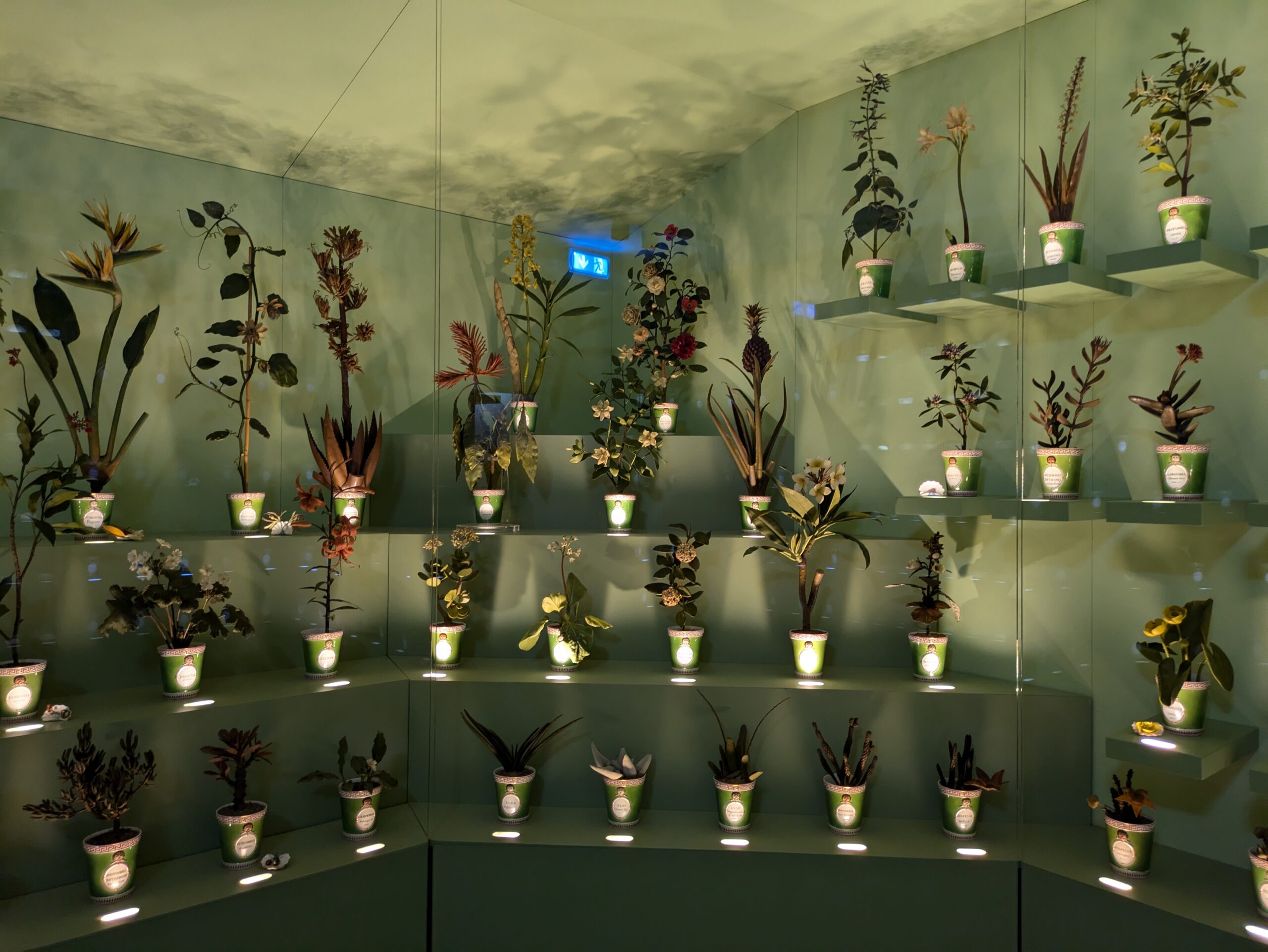
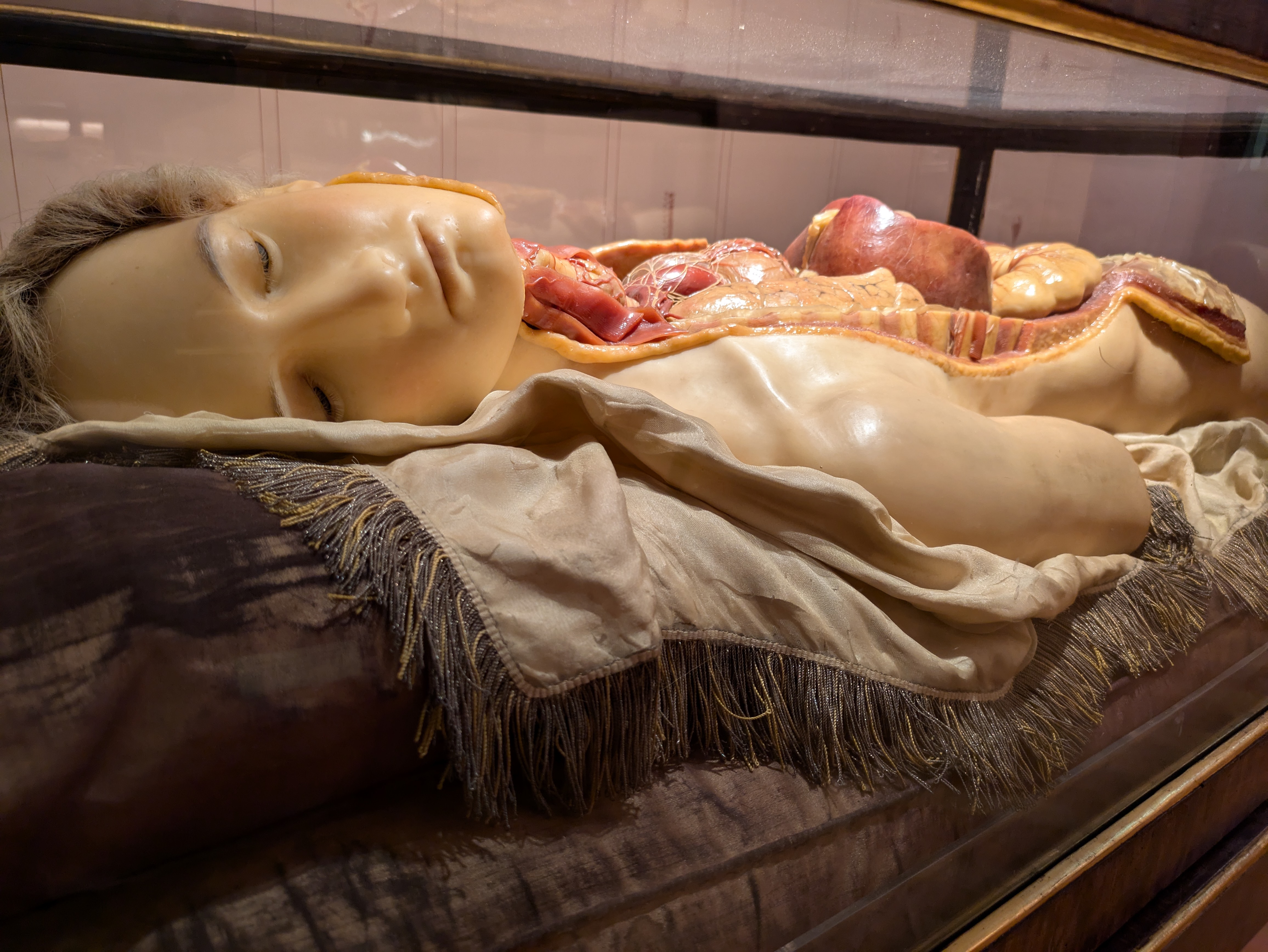
Beyond the herpetology collection, La Specola itself was an extraordinary experience. We also had the chance to explore the museum’s historical wax collection, famous for its incredibly detailed anatomical models. The craftsmanship and realism of these works are breathtaking and reflect the long scientific and artistic history of the museum. In addition, we visited the newly arranged collections of botany and systematics, which beautifully combine scientific knowledge with elegant presentation.
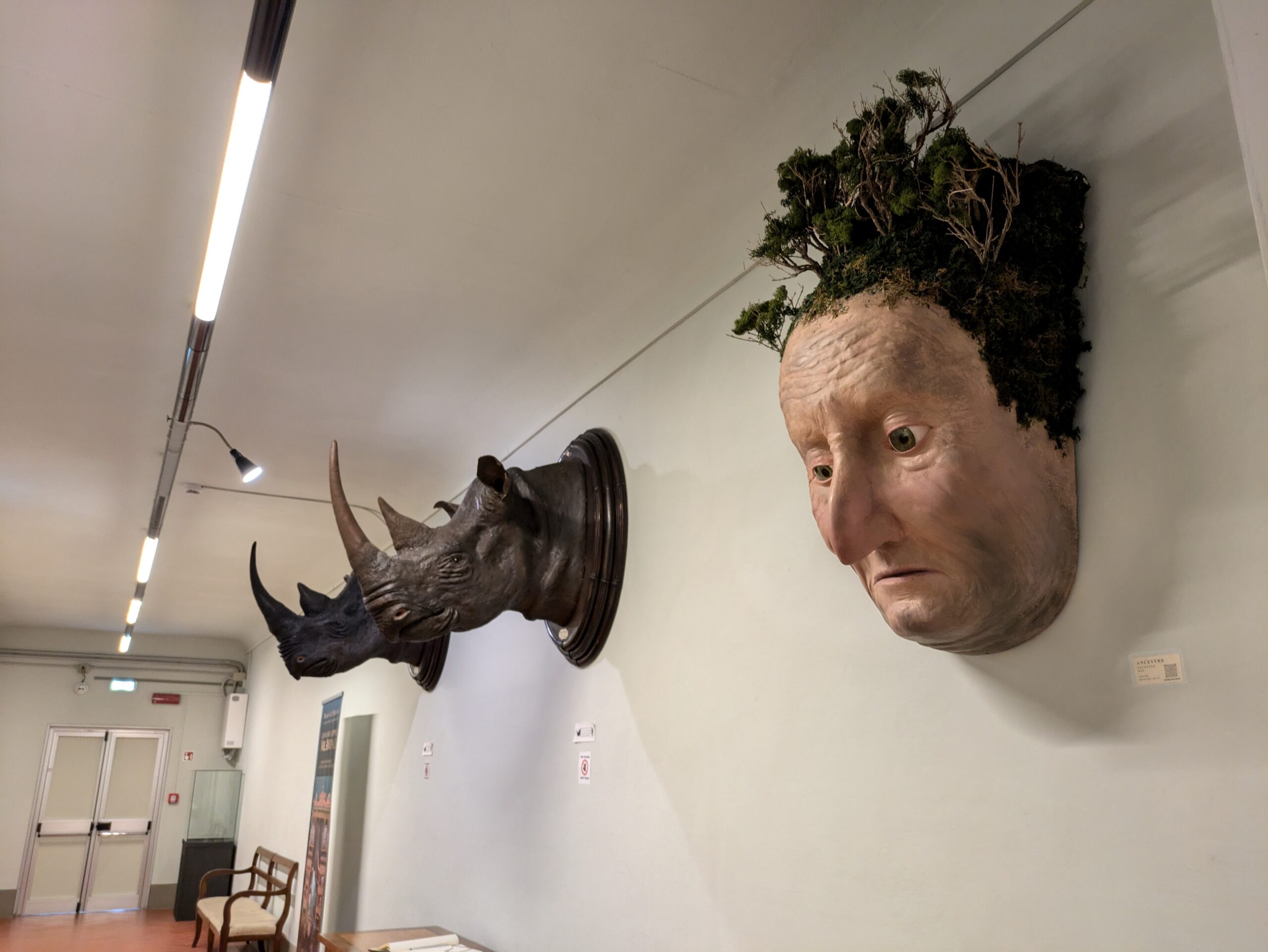
Another highlight of the trip was discovering the temporary exhibition by Giovanni Lopez. The exhibition featured anthropomorphic animals placed within dreamlike and fantastical landscapes, creating scenes that felt almost surreal. The artworks carried strong metaphysical undertones and invited visitors into imaginative worlds where nature, symbolism, and fantasy blended together in fascinating ways.
Overall, the trip was an enormous success, both scientifically and personally. We returned with valuable material, new ideas, and plenty of motivation for the months ahead. Most importantly, Morgane now has access to a wealth of important data that will play a major role in her PhD research.
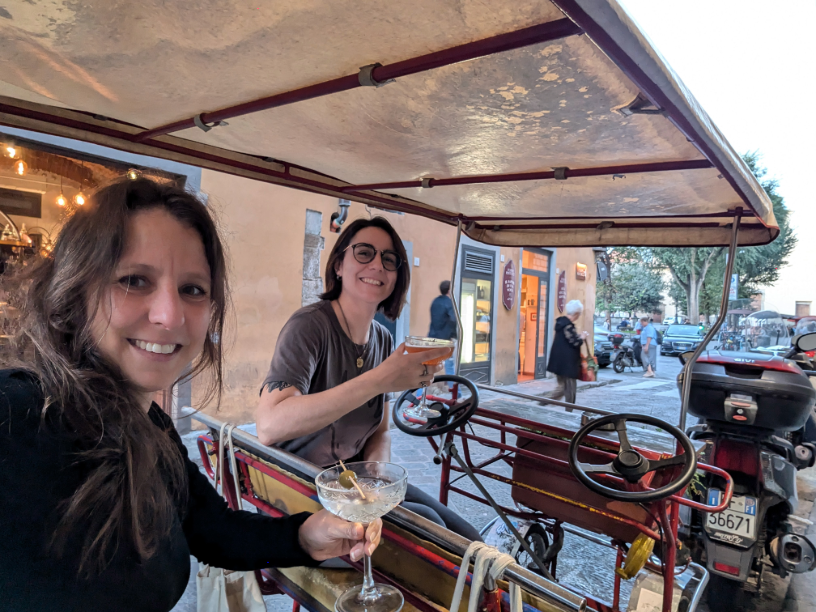
Cheers to a successful trip and to many exciting discoveries ahead!