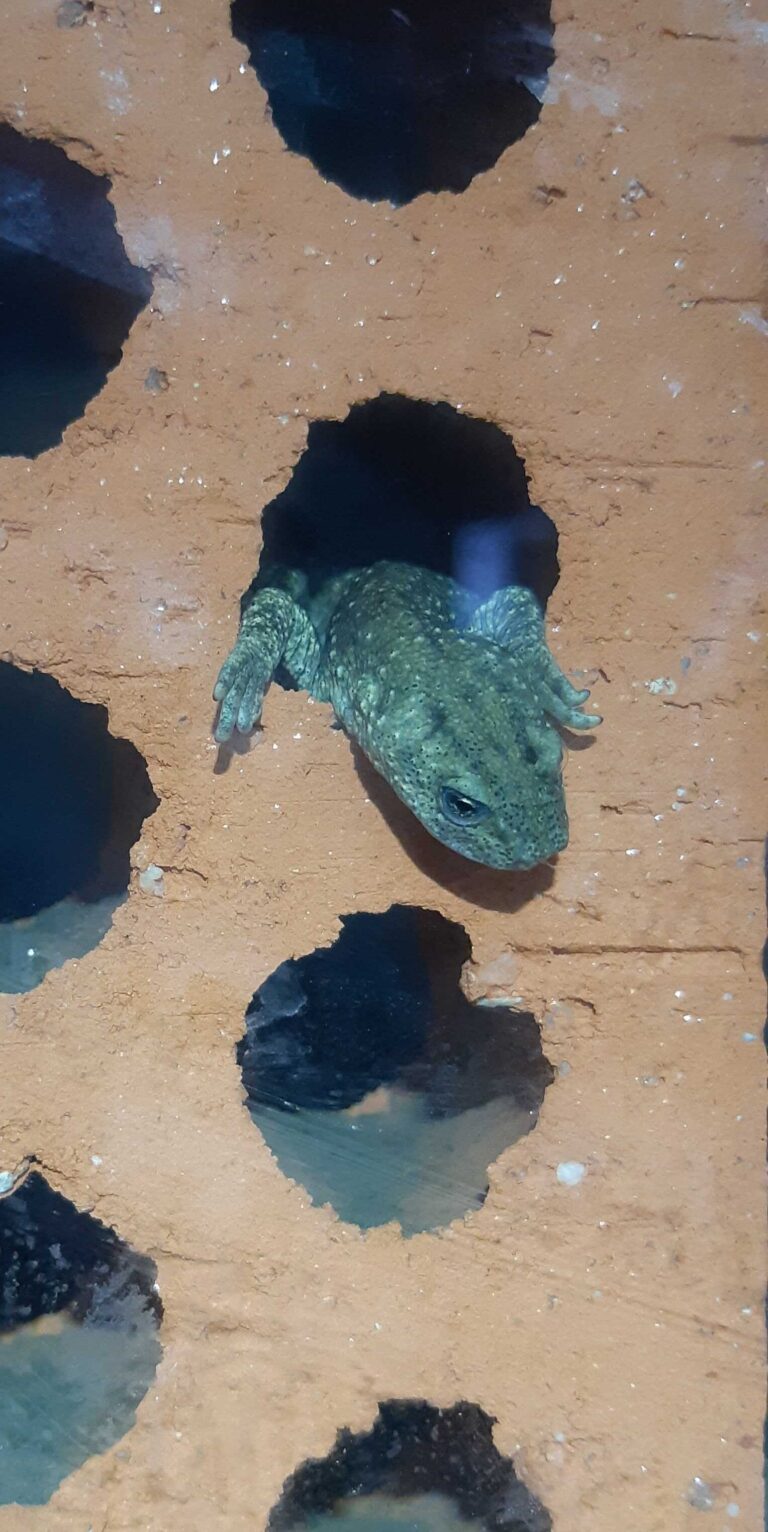


Muscles power the movements that we rely on for everyday life (e.g., walking, running, eating, picking up objects, and many more). But say we were to evolve to live in a different environment or to grow up in a different way, say without passing through puberty or staying as an adolescent all our life. Would we need to change the size and shape of our muscles? Or are our muscles more like a “one size fits all” system that works for many environments or many ways of growing up?
This is the question we asked—but for salamanders!—in our research article published in May 2026 in the journal Integrative & Comparative Biology. After collecting data from 25 species of salamanders and running the data through evolutionary statistical analyses, we found that, for salamanders, muscles are not a one-size-fits-most system.
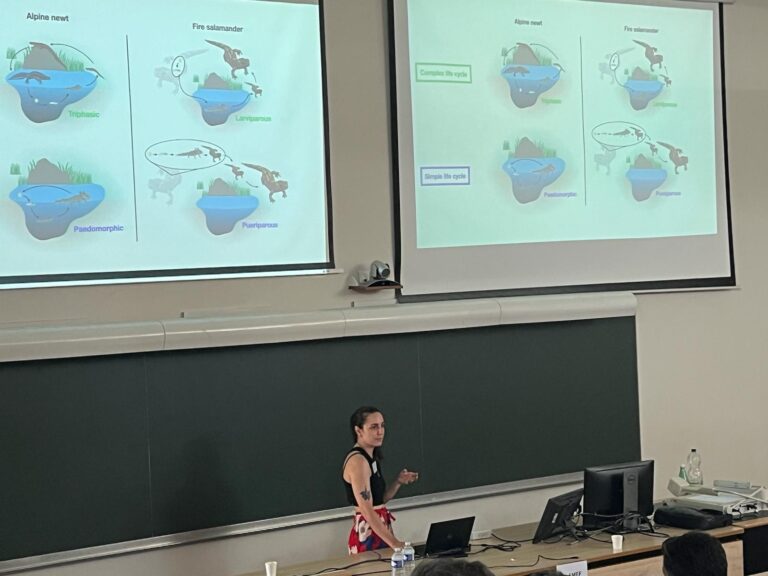
Salamanders that shift from living in water to living on land had muscles that differed from salamanders that remained in a single environment all of their life. Salamanders that go through a larval stage to become an adult had different muscles from salamanders that either skip the larval stage or remain like a larval salamander their whole life. And salamanders that live on land as an adult had different muscles from those that live in water as an adult. Adult salamanders that call water their home had evolved the strongest and largest muscles: it takes a lot of muscle force and power to expand the mouth underwater to create suction and those land lover salamander can get by with less muscle.
This research suggests that muscle sizes and shapes in animals need to be tuned to or at least vary with many different aspects of how we live as animals, including the environments that we live in and even the way in which we grow up and mature. And that in turn changes how we’re able to use those muscles to move through (and throughout!) our life.
You can read the full research article “Impact of Life-Cycle Variation on Feeding System Musculature in Caudata” in the journal Integrative & Comparative Biology at https://doi.org/10.1093/icb/icag040.